The Role of Gamification in Participatory Environmental Sensing: A Study In the Wild
summary
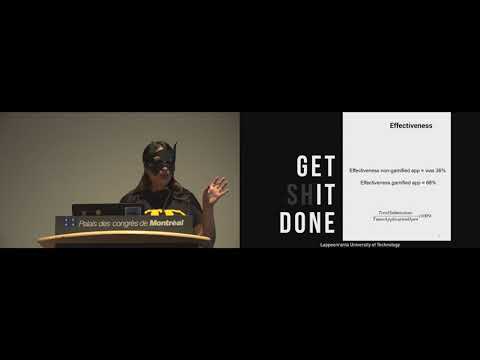
A field experiment deploys two mobile apps (gamified and non-gamified) to collect lake ice observations from 41 volunteers over 20 days and finds the gamified version yields 71% more submissions, twice the effectiveness on task completion and 10 highly active users versus 3 in the control, while learnability and overall satisfaction remain similar; the system uses photo uploads, story-based education, progress tracking and a leaderboard that provokes online and offline competition, suggesting gamification boosts participation but requires customizable notifications, challenges and care with leaderboard effects given the small sample and short duration.
AI-written summary · about
chapters (11)
- 0:00Introduction and setup
- 1:35Participatory environmental sensing
- 3:02Gamification research debate
- 4:48Study on Cyma Lake monitoring
- 6:32User engagement findings
- 8:59User experience and effectiveness
- 10:04Key gamification elements
- 12:10Study reflections and insights
- 13:33Design recommendations
- 16:24Limitations and future work
- 16:45Conclusion and Q&A
related talks
 08mThe Effect of Gamification Mechanics on User Experiences of AdventureLEARN: a Self-driven...
 26mGamification and how Games are Occupying the World!
 01mEcoMeal: Gamified Eco-Feedback of Food Consumption using a Virtual Garden
 08mHow Gamified Are Sustainable Food Apps? Applying the Gameful Design Heuristics to Evaluate Sustai...
 06mA Review of Gamified Fitness Tracker Apps and Future Directions
 19mHabitsourcing: Sensing the Environment through Immersive, Habit-Building Experiences
 08mInvestigating the Effects of Tailored Gamification on Learners' Engagement Over Time in a Learnin...
 03mThe Cost of Reward: A Critical Reflection on the `What', `How', and `Why' of Gamification for...