Environmental Factors in Indoor Navigation Based on Real-World Trajectories of Blind Users
summary
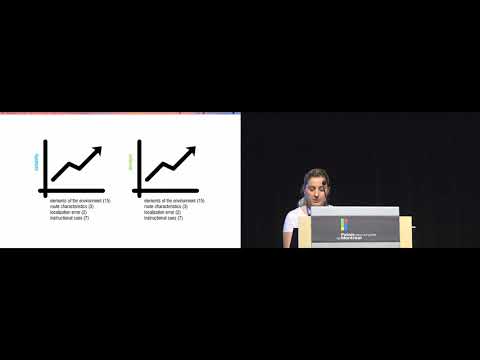
Study analyzes real-world NavCog 3 deployments with nine blind participants using iPhone 6 and Bluetooth low-energy beacons on three planned routes totaling 407 m and fits a linear regression over 27 post-processed variables to predict deviation and variability. Results show stairs nearby and open spaces strongly increase variability, approach direction affects deviation, localization error and turn instructions are less explanatory than environment, variability is auto-computed while deviation is manually annotated, and code and data are published for replication.
AI-written summary · about
chapters (8)
- 0:00Introduction and motivation
- 2:54Study design and data collection
- 6:53Measuring path following behavior
- 9:02Environmental factors analysis
- 11:33Key findings and implications
- 14:25Recommendations and future work
- 15:31Conclusion and acknowledgments
- 15:52Q&A session
related talks
 45mMobility and Orientation: Experimenting with Inclusive Localization Systems
 32mDesigning for Accessibility
 42mBlindTag System: Direction and Distance to Landmarks via Phone
 13mAnalyzing and broadcasting accessibility with OpenStreetMap
 35mHow Android smartphones can help blind people's mobility
 33mExploring the world while seeing nothing
 25mWalkie-Markie: Indoor Pathway Mapping Made Easy
 27mOne blind weekend