Sensitizing Concepts for Socio-spatial Literacy in HCI
summary
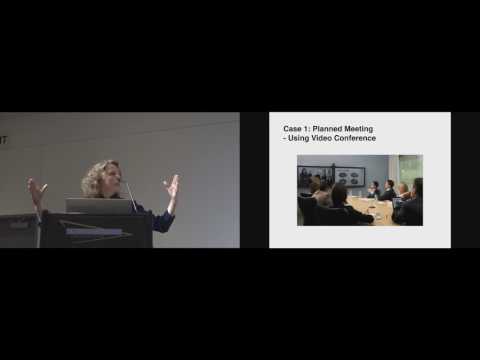
Argues for three concrete, testable sensitizing concepts — Proxemic Malleability, Proxemic Threshold, Proxemic Gravity — and applies them to four design cases: fixed video-conference rooms, Kinect tracking, a democratic presenter-control system, and mobile-to-shared-display content sharing. Shows how display size, camera framing, tracking algorithms and interaction paths change distance norms: democratizing controls lowers thresholds and gravity and increases malleability so co-located people move from rigid social spacing toward more personal interactions. Offers concepts as analytic lenses and generative design tools.
AI-written summary · about
chapters (9)
- 0:00Intro
- 2:09Motivation
- 3:40Proxemic Consequences
- 6:14Proxemic Zones
- 8:24Contribution
- 8:59Interaction Proxemics
- 9:46Proxemic interactions
- 10:47Developing Sensitising Concepts
- 14:55Conclusion
related talks
 17mParticipation Gestalt: Analysing Participatory Qualities of Interaction in Public Space
 38mWhen the Web Re-Enters the Material World
 Learning from Users: Everyday Playful Interactions to Support Architectural Spatial Changes
 27mExploring spatial software
 55mPanel Discussion: Human Centered Design for the Digital Age
 37mDeep Interaction
 20mRe-Making Places: HCI, 'Community Building' and Change
 06mDesigning Interactions beyond Conscious Control: A New Model for Wearable Interfaces