Morphological Interfaces: On Body Transforming Technologies

summary
Survey of body-transforming tech classifies four approaches—extensions of the skeleton, supernumerary robots, internal actuation via electrical muscle stimulation, and sensory-motor retargeting—and gives concrete results: monkey rake studies show tool areas expand in minutes, VR avatar experiments demonstrate rapid adaptation including remapped limbs, a monkey controlling a robotic gripper via implanted electrodes reaches 61% success rate in two days, and rubber-hand variants produce third-arm ownership. Practical work covers a shoulder-mounted extra arm, seven-finger hands, targeted muscle reinnervation and osseointegration with chronic tactile feedback; key challenges are synergy, modularity, reconfigurability, and bandwidth for control.
AI-written summary · about
chapters (9)
- 0:00Intro
- 0:28Body is an interface
- 4:27Cognitive science
- 6:22Morphological interfaces
- 9:59Sensory motor retargeting
- 12:35Modular robotic platform
- 13:57Human machine interface
- 14:43Targeted muscle reinnervation
- 15:38Summary
related talks
 16mStrange New Bodies: Design Beyond Robots
 06mDesigning Interactions beyond Conscious Control: A New Model for Wearable Interfaces
 18mSkin-On Interfaces: A Bio-Driven Approach for Artificial Skin Design to Cover Interactive Devices
 44mBuilding experiences for the superhuman future
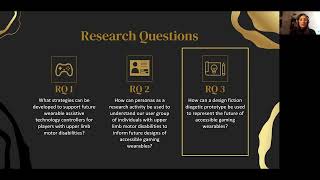 07mFrom Imagination to Innovation: Using Participatory Design Fiction to Envision the Future of Acce...
 07mAdroid: Augmenting Hands-on Making with a Collaborative Robot
 14mTransforming Everyday Objects into Dynamic Interfaces using Smart Flat-Foldable Structures
 32mSuperheroes and Super Interfaces: Is the Future Now?