Interactive Performance as a Means of Civic Dialogue
summary
An immersive theater piece named Hyman runs on a mobile app synchronized to subway stops that pauses scenes to collect audience text answers to four questions; the study logs 276 entries, 18 questionnaires and six post-show interviews from about 40 participants. Responses are mostly single-word, serious contributions (about 65–70 messages per question), create a temporary public and reframed the suburb, but show little conflict and local inhabitants underrepresented, so artistic framing attracts engaged outsiders more than the targeted neighborhood voices.
AI-written summary · about
chapters (13)
- 0:00Introduction to interactive performance
- 1:31Background on the performance
- 2:36How the interactive experience worked
- 4:22Audience participation mechanics
- 5:23Study methods and participants
- 6:04Key findings on civic dialogue
- 7:11Journey as collective experience
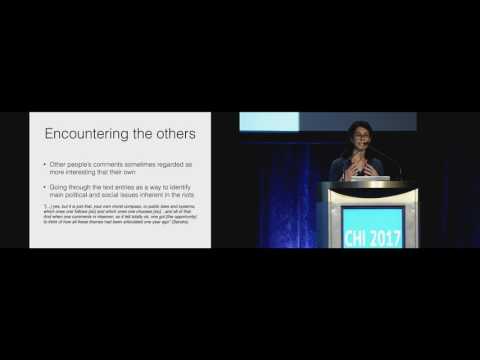
- 8:56Encountering other audience members
- 10:01Meaning in shared text entries
- 11:51Lessons from the study
- 13:38Aesthetic and political participation
- 14:41Implications for future design
- 16:25Q&A session begins
related talks
 20mRe-Making Places: HCI, 'Community Building' and Change
 43mInteractive Storytelling Adventures
 19mDesigning the Audience Journey through Repeated Experiences
 03mStage & Play: Using Game Technologies in the Context of Digitally-mediated Theater Performances
 17mParticipation Gestalt: Analysing Participatory Qualities of Interaction in Public Space
 28mThe Exhibition as a Living Organism
 19mIntermodulation: Improvisation and Art Practice for HCI
 37mDigital Engagement, Community, & Imagination