Dissecting Spear Phishing Emails for Older vs Young Adults: On the Interplay of Weapons of ...

summary
Field experiment runs for 21 days with 158 participants (99 young, 59 aged 65+), a browser extension records URLs and participants receive 21 counterbalanced, personalized phishing emails from 22 fake accounts that link to harmless static pages; susceptibility is a click. Key results: 43% clicked at least once, older women most vulnerable, 12% click multiple times; younger adults respond to scarcity, older adults to reciprocation; both ages respond to authority and legal cues; self-reported awareness is low, especially among older adults.
AI-written summary · about
chapters (9)
- 0:00Introduction to study
- 1:09Demographics of older adults
- 2:37Cognitive decline and trust
- 4:22Social engineering basics
- 7:16Weapons of influence explained
- 9:24Study design and setup
- 12:57Key findings on susceptibility
- 15:29Take-home message and future work
- 16:58Q&A session
related talks
 09mPresenting Suspicious Details in User-Facing E-mail Headers Does Not Improve...
 27mBlunting the Phisher's Spear: A Risk-Based Approach...
 05mKnowledge and Capabilities that Non-Expert Users Bring to Phishing Detection
 41mHook, Line, & Sinker - Addressing the Human Risk of Phishing and How to Avoid the Bait
 07mSpear Phishing the Masses: When Open Data is Dark
 05mAn investigation of phishing awareness and education over time: When and how to best
 43mExploiting Curiosity and Context: How to Make People Click on a Dangerous Link...
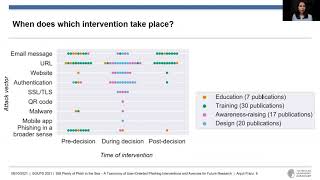 06mSoK: Still Plenty of Phish in the Sea — A Taxonomy of User-Oriented Phishing