Designing Movement-based Play With Young People Using Powered Wheelchairs

summary
Nine young people (ages 13–22) help co-design three wheelchair-controlled games (Speed Slope, Rumble Robots, Rainbow Journey) built in Unity using an extended Connect Wheels integration and a mix of skeleton and marker tracking for players with limited upper-body movement. Case studies with four players show games are engaging but reveal surprising problems: assistive-device lag breaks timing-sensitive play, small motor differences create large balance gaps, and disability representation in avatars meaningfully affects motivation and identity.
AI-written summary · about
chapters (5)
- 0:00Introduction and motivation
- 3:18Participatory design process
- 6:33Game development and concepts
- 8:22Case studies and findings
- 12:26Future directions and conclusions
related talks
 08mTowards Greater Inclusion and Accessibility for Physically Disabled Players in Location-Based Games
 03mExploring Gaming Wearables for Players with Upper Limb Motor Disabilities through Design Fiction ...
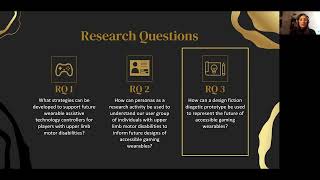 07mFrom Imagination to Innovation: Using Participatory Design Fiction to Envision the Future of Acce...
 08mGrowing Up with Cerebral Palsy (CP) and Games: Case Study on the Accessible Gameplay Experiences ...
 50mAccessibility Revolution! | Gaming's New Frontier
 30mDesigning a Mixed Reality Game Experience to foster Social Initiation in Children with Autism
 14miGYM: An Interactive Floor Projection System for Inclusive Exergame Environments
 33mDeveloping Accessible Games with Unity