Collaboration Without Data Loss: Keep IP From Leaking to Competitors

summary
Insider-risk incidents grow ~32% year‑over‑year and 60% of U.S. workers admit reusing prior‑job data; recent cases include a $2B judgment in the Appian‑Pegasystems dispute and the Teixeira leak from a pool of ~400,000 with access. Modern defenses focus on cloud + endpoint detection (monitoring Git pushes, Dropbox/Gmail/Slack/OneDrive/Salesforce destinations), automated scoring to reduce alerts, and workflows combining enforcement, expertise, empathy with retain‑and‑inspect copies for high‑risk events.
AI-written summary · about
chapters (13)
- 0:00Introduction and disclaimer
- 1:46Why insider risk is growing
- 4:37Three main drivers of risk
- 8:28Current security programs and challenges
- 13:22Three E's for insider risk
- 14:03Why old DLP solutions fail
- 16:56New solutions for collaboration
- 19:53Key features of new technology
- 21:33Expertise: people, processes, promotion
- 24:25Communication and education
- 26:53Empathy in security practices
- 31:25Summary and next steps
- 32:28Q&A session
related talks
 48mProtect Valuable Data as Employee Turnover Rages
 40mA Data Protection Problem: Insider Risk
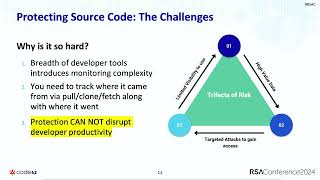 43mWhy Source Code Exfiltration Is the Biggest Blind Spot in Insider Threat
 31mThe Return of Hacktivism – The Insider
 54mInsider Threats and New Economy Industries
 15mSecret Tips to Reduce Insider Threat Risks with Behavioral AI
 26mInsider Threats Packing Their Bags With Corporate Data
 26mPrivacy Issues in Big Data Processing in light of Data Breaches