Modern Bank Heists
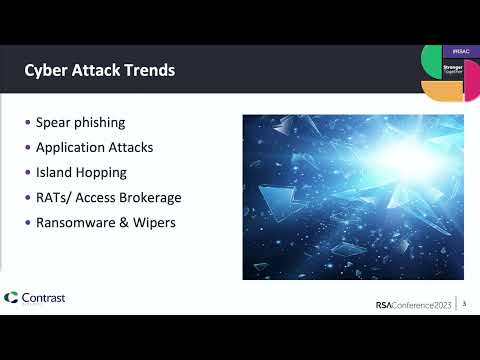
summary
Financial institutions face coordinated, transnational cyber cartels that monetize BEC and global cash‑outs; law enforcement runs 43 cyber fraud task forces and reports recovery rates of about 55–60% if notified within 24 hours (dropping to ~1% after 72 hours). Examples cited include a money launder moving $40–50M/month, $300M recovered since 2019, Log4j hitting millions of apps, automated AI‑crafted phishing, SIM‑swap fraud via collusive carrier employees, API attack surface growth, and the need for runtime app defenses.
AI-written summary · about
chapters (11)
- 0:00Welcome and introductions
- 1:06Secret Service cyber crime focus
- 5:23MasterCard security priorities
- 8:18Phishing and AI threats
- 15:12Application security attacks rise
- 16:59Ransomware and cryptocurrency tracking
- 21:35Financial services specific threats
- 32:14Protecting APIs and cloud security
- 35:04Threat intelligence sources
- 41:54Call to action and partnerships
- 45:05Q&A on money mules and SIM swapping
related talks
 40mHow the BEC Threat Landscape is Evolving and What We Can Do About It
 40mEscalation from Heist to Hostage: Modern Bank Heists 4.0
 35mHow I Handled One of the Biggest Banking Fraud Incidents of 2020
 40mBanking Cybersecurity: Battling DeepFakes & AI-powered Scammers
 47mThe Heist: Chasing an Advanced Crypto Attacker Across the Multi-cloud
 48mHow Modern Bank Heists Are Escalating to Hostage Situations
 01h 01mPrincess of Thieves: How I Robbed 30 Banks
 01h 02mNation-State Moneymule's Hunting Season – APT Attacks Targeting Financial Institutions