NIST Cybersecurity Framework v2.0: What’s changing?
summary
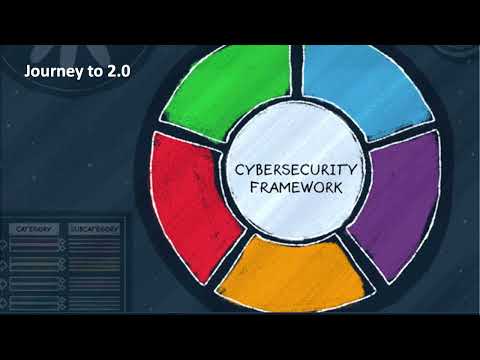
NIST posts a CSF core draft now and targets final 2.0 for winter 2024; the core adds six functions (moving governance out of Identify), shifts 23 categories to 21 and expands 108 subcategories to 112, and keeps the four-tier measurement approach rather than a maturity model. The update builds an online informative reference and machine-readable tooling (notably OSCAL/CPRT) to link CSF outcomes to SP 800-53, SP 800-161 and other guidance, and emphasizes supply chain risk, clarified roles, and more implementable prose.
AI-written summary · about
chapters (11)
- 0:00Introduction and speakers
- 1:05About CForum and NIST CSF v2.0
- 3:02Purpose of the CSF update
- 8:16Existing CSF resources
- 13:38Keeping core flexible and clear
- 16:05Governance as a new function
- 17:30Supply chain risk management
- 18:56Measuring cybersecurity progress
- 20:20Core draft overview
- 30:03Diving into the core details
- 47:34Next steps and community involvement
related talks
 35mRevolutionizing Cyber Defense: The NIST CSF 2.0 Advantage
 53mThe New and Improved NIST CSF 2.0
 29mMeasuring Cybersecurity Maturity with the NIST CSF
 43mCSF Over Time: Shifting from Identify/Protect As You Grow
 01h 29mFrameworks and Related Standards
 47mCybersecurity: Is It about Business or Technology?
 46mThe Perfect Storm, What NIS2 and CRA Mean for Your IT Security Strategy
 40mCompliance Made Easy—Simplify Your Approach to Privacy