A Taste of Privacy Threat Modeling

summary
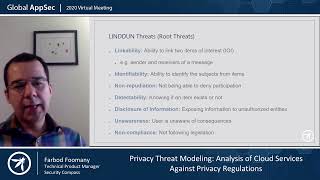
Privacy integrates into development via threat modeling: use a system model, apply LINDDUN’s seven categories (linking, identifying, non‑repudiation, detecting, disclosure, unawareness, non‑compliance), prioritize risks, and choose mitigations. Concrete examples include a Bluetooth doll (Kayla) banned from Germany because voice data flows to an untrusted analytics vendor and insecure Bluetooth; Strava location reidentification and Roomba camera leaks. Practical tools and artifacts mentioned: LINDDUN threat trees and GO cards, Threat Dragon, and automated assessment with SPARTA. ROI estimates cited: roughly 2–5× for privacy investments.
AI-written summary · about
chapters (7)
- 0:00The ice cream metaphor
- 2:01Threat modeling basics
- 5:50Why privacy matters
- 11:58Understanding privacy threats
- 21:50Applying threat modeling
- 33:24Tools and resources
- 37:31Key takeaways and Q&A
related talks
 51mA Taste Of Privacy Threat Modeling by Kim Wuyts
 48mStriding Your Way to LINDDUN: Threat Modeling for Privacy
 18mScaling Privacy Threat Modeling: From Architects to Developers
 41mPrivacy Threat Modeling Analysis of Cloud Services Against Privacy Regulations
 22mPrivacy Threat Modeling
 20mPrivacy Shift Left: A Machine-Assisted Threat Modeling Approach
 40mPersonal Threat Models and, Speculatively, Privacy Governance
 53mI don't need privacy, I got confidentiality!