Hack the Institution – A Map To a Strong Partner-Based Security Program
summary
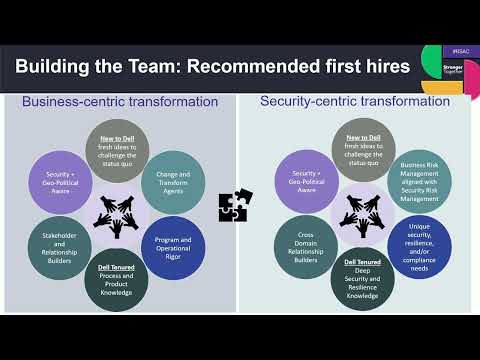
Argues that a federated, partner-based security model—centered on a transformation PMO embedded in business units and a business management system for regular KPIs—moves teams from reactive to proactive within a year. Describes specific hires (program managers + security SMEs), tools (centralized messaging, newsletters, RACI, executive alignment), and outcomes: stitched EO requirements and SBOM/zero-trust work into product roadmaps, survived Russia-Ukraine pressures, and reduced firefighting. Notes mistakes: mismatched planning cycles, overburdened engineers, and failed one-size-fits-all toolboxes. Shared accountability drives decisions.
AI-written summary · about
chapters (11)
- 0:00Introduction and context
- 3:16Why partner-based security
- 8:16Building the governance team
- 16:13Hiring the right team
- 21:18Communication and strategy
- 25:15Operational rigor and alignment
- 28:50Setting shared strategy
- 35:57Lessons learned and mistakes
- 40:36Alternative models overview
- 44:30Steps to implement this approach
- 48:21Q&A on accountability
related talks
 24mConcrete Steps to Create a Security Culture
 37mSecurity Culture Hacking: Disrupting the Security Status Quo
 24mBeing secure by design: Engineer-led security
 38mKeynote: Dumping Traditional Security Teams
 40mInformation Security Management Programs-Changing the Paradigm on Implementation and Management
 39mProactive Security, less buzzword, more action
 59mCybersecurity as an ecosystem
 51mBuilding Security Champions