Using Influence to Stop the Unfluence: The Secret Sauce of Cybersecurity
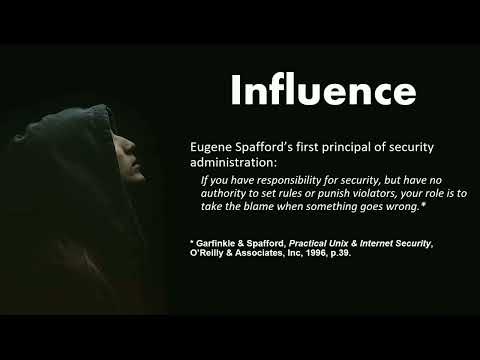
summary
Claims that targeted persuasion reduces malicious “unfluence” by combining persuasion, psychology and business framing; tools recommended include RACI charts, the five‑whys, Verizon DBIR metrics, Cialdini principles and Hadnagy micro‑expression techniques; demonstrations include a badge‑scan trick (black dot) and a social‑engineering class where about 50% of students successfully borrowed phones to leave voicemails; advice is to hack yourself first, quantify loss in financial terms, observe micro‑behaviors and always ask who owns the headache.
AI-written summary · about
chapters (14)
- 0:00Start
- 8:04Influence vs. Unfluence
- 15:54Common Challenges: Complacency
- 16:37Common Challenges: Talking another language
- 17:59Common Challenges: Security's Role?
- 20:36Why we "do" security
- 22:32Random Dad Joke
- 23:30Leadership Characteristics
- 27:50The Power of Observation
- 30:51Connecting Techniques
- 40:00One Minute Security Manager
- 43:25Office Politics / Organizational Culture
- 45:16Persuasion Principles
- 46:36Who Owns the Headache?
related talks
 40mUnder the Unfluence: the Dark Side of Influence
 30mThe Power of Persuasion: Better Security Through... Manipulation?
 35mProtecting the Organization: The Psychology of Social Engineering
 53mThe Psychology of Social Engineering
 23mSocial Cybersecurity: Social Influence and Design in End-User Cybersecurity
 36mUntangle the mystery of influential speaking
 51mHacking Ten Million Useful Idiots: Online Propaganda as a Socio-Technical Security Project
 38mShaping Language in Cybersecurity For People