Enhancing Space Cybersecurity: Securing Space Systems from Cyber Threats

summary
Panelists lay out concrete risks and fixes: the Viasat incident and ongoing nation‑state jamming/spoofing show attackers target the ground segment as the easiest entry; NOAA explains GEO/LEO and sun‑ward satellites can’t be serviced, survive 7–15 years, and need encryption resilient to post‑quantum threats; industry runs a 24/7 Space ISAC Watch Center sharing nation‑state TTP alerts, RF interference and supply‑chain intel; policy teams publish a summer timeline for minimum cybersecurity standards for federally procured space systems.
AI-written summary · about
chapters (16)
- 0:00Space cybersecurity challenges
- 4:40White House space security
- 7:09NOAA’s space infrastructure role
- 9:59DOD space threat landscape
- 13:59Space ISAC industry insights
- 16:48Securing space assets
- 20:23Policy gaps in space cybersecurity
- 23:16Commercial integration challenges
- 28:33Space cybersecurity solutions
- 31:51DOD’s space defense strategy
- 35:02Operators’ cybersecurity needs
- 38:54White House minimum standards
- 43:10Key takeaways and call to action
- 45:01Q&A: Dangerous spacecraft threats
- 47:32Q&A: Judging commercial cyber posture
- 49:22Q&A: Future minimum standards
related talks
 46mSecuring Space: The Next Frontier for Security Engineers
 44mAn Introduction to Cybersecurity in Space
 31mSatellite Communications: Analyzing & Protecting Space-Based Assets
 11mHacking in Space
 18mHow is AI transforming the cybersecurity of space?
 16mTaking Flight – 3 Experts Discuss Aerospace Cybersecurity
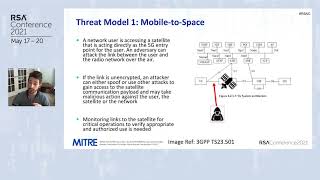 40mMonitoring Strategy for the Coming Space 5G Network
 50mSpace and Cyberspace at the White House