Monitoring Strategy for the Coming Space 5G Network
summary
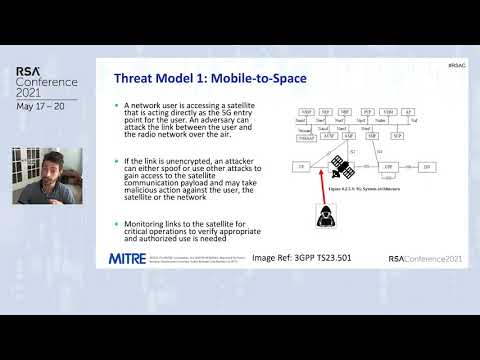
Claims that DHS CDM-style architecture maps to Space 5G, with a reference design using Elastic Stack and Kibana to ingest logs. Defines two concrete threats: link attacks against UE–gNodeB over satellite and compromise of satellite command‑and‑control (C2) that disrupts orbit/attitude and breaks low‑latency links. Notes practical hurdles: AMF visibility loss when VNFs move, bespoke RF/front‑end parsers required, intermittent telemetry from non‑geostationary satellites and severe bandwidth limits, and recommends out‑of‑band monitoring plus Space ISAC feeds.
AI-written summary · about
chapters (10)
- 0:00Introduction
- 1:07Agenda
- 2:17Background on 5G
- 7:55Threat Model
- 12:31Threat Model 2
- 15:21Core Components
- 20:01ISAC
- 22:18Space Vehicle
- 29:56Action Items
- 32:47Conclusion
related talks
 44mAn Introduction to Cybersecurity in Space
 31mSatellite Communications: Analyzing & Protecting Space-Based Assets
 51mEnhancing Space Cybersecurity: Securing Space Systems from Cyber Threats
 46mSecuring Space: The Next Frontier for Security Engineers
 17mCellDAM: User-Space, Rootless Detection and Mitigation for 5G Data Plane
 11mHacking in Space
 33mHacking 5G From Radio Security To The Apis
 40mSecuring Connections: Defending Telco Workloads in the Cloud Era