Zero Trust, Zero Pain: A Practical Implementation with Intrinsic Security

summary
VMware cites Forrester research and outlines an actionable Zero Trust stack: per‑app tunnels to replace device VPNs, PoPs/SASE points to normalize connectivity, and device posture checks (OS age, patch status, firewall, disk encryption) feeding a risk engine that triggers automated remediation or restricted access. The architecture adds East‑West micro‑segmentation in multicloud, telemetry from endpoint sensors plus network and identity sources, and expects multi‑vendor integrations to make the system practical.
AI-written summary · about
chapters (13)
- 0:00Intro
- 2:03The Branch Has Evolved
- 2:59Increased Attack Surface
- 4:14Zero Trust Seeks to Secure the Distributed Enterprise
- 5:11The Need for Distributed Security to Achieve Zero Trust
- 6:20End-to-end Zero Trust Capabilities
- 11:55Applying Zero Trust Capabilities for Users and Devices
- 17:39Comprehensive Conditional Access
- 20:07Legacy Management and Security
- 24:53Secure Access
- 27:08Operationalizing Zero Trust on East-West Traffic
- 29:56Comprehensive Endpoint and Workload Protection
- 31:23End to End Zero Trust Architecture Any device, 200 or location
related talks
 31mEmbracing Zero Trust When You Aren't the World's Largest Internet Company
 02h 48mZero Trust: the new normal!
 45mZero Trust: Getting to Step One..and What to Do When You Get There
 18mRedefining Cybersecurity: Harnessing Zero Trust Architecture for a Resilient Future
 01h 02mIntroduction to Zero Trust Security
 40mClarifying Zero Trust: The Model, the Philosophy, the Ethos
 49mZero Trust Security
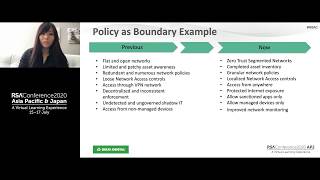 27mA Simplified and Practical Approach to Pursuing a Zero Trust Architecture