VIP-Sim: A User-Centered Approach to Vision Impairment Simulation for Accessible Design
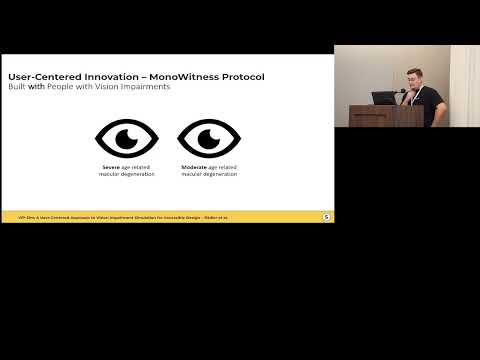
summary
VIP-Sim presents a participatory, symptom-based simulator built with N=7 vision-impaired collaborators using the Mono Witness Protocol and iterative GPU shaders. It overlays any desktop design tool on macOS and Windows, implements 21 adjustable symptoms and webcam-based eye tracking for gaze-dependent field loss, is open-source, and participants on average validate shaders 3–4 times. Most participants say simulations match their experience, but concerns remain about coverage of diverse VIP experiences and the risk of exclusion if used instead of real user involvement.
AI-written summary · about
chapters (9)
- 0:00Introduction and motivation
- 1:50Limitations of existing simulators
- 3:13User-centered development process
- 5:41Technical implementation and demo
- 6:23Practical example and tool integration
- 7:05Open-source release and features
- 7:25Ethical considerations and responsible use
- 8:50User feedback and future outlook
- 9:13Closing and Q&A
related talks
 24mAugmenting Empathy: Simulating Low-Vision Conditions with CSS, SVG and WebRTC
 15mAccessibility: A line of code can be many things
 08mBlueVR: Design and Evaluation of a Virtual Reality Serious Game for Promoting Understanding towar...
 08mExploring color blindness simulations as tools to create chromatically accessible games
 22mInclusive UI design
 50mBuilding A11y & Inclusion into Interactive Science Simulations
 21mVizLens: A Robust and Interactive Screen Reader for Interfaces in the Real World
 17mTowards a Multisensory Augmented Reality Map for Blind and Low Vision People: a Participatory ...