StepWrite: Adaptive Planning for Speech-Driven Text Generation
summary
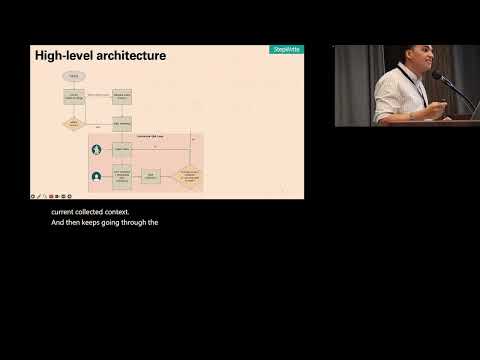
A voice-driven system decomposes composition into a QA loop that asks targeted prompts, runs a fact-checking pass, classifies tone, and generates drafts that users then edit once on average; a 25-participant study finds 70% of questions necessary, 92% tone classification accuracy, and 77% fewer edits versus dictation while remaining slower than baseline because it elicits more content; supports pause, skip, undo, and wearable-friendly hands-free workflows.
AI-written summary · about
chapters (13)
- 0:00Introduction and motivation
- 1:50Background on voice tools
- 3:14Why now and system vision
- 4:20High-level system architecture
- 5:44Demo of StepWrite in action
- 7:11Supported commands and features
- 7:31Study design and participants
- 8:34Revision effort and readability results
- 9:37Temporal efficiency and question necessity
- 10:19Tone classification and subjective results
- 10:41User agency and broader implications
- 12:07Future applications and open source
- 12:30Q&A session
related talks
 07mJust Speak It: Minimize Cognitive Load for Text Editing with a Smart Voice Assistant
 38mCreate the next generation of user experiences with text generation
 59mDesigning for speech
 17mBuilding Effective Voice Agents
 55mDesigning for speech
 19mTwain: (re)building AI writing assistant
 01h 04mBuilding Expertise Into Generated Conversations
 18mHow structured thinking gives your AI superpowers