AttraCar: Multisensory In-Car VR with Thermal, Airflow, and Motion Feedback through Built-In Vehi...

summary
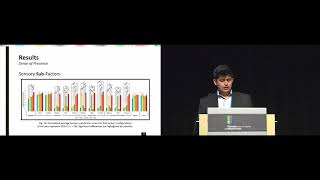
AttraCar repurposes a car’s HVAC and power seat to deliver thermal, airflow, and motion cues, using PWM and CAN control, relay valves, PI loops and K-type sensing, with airflow up to 7.6 m/s, seat travel at 14 mm/s, temperature range 15–50 °C and end-to-end latency ~68 ms. JND tests define four intensity levels, a 24‑participant on‑road study (six feedback conditions, 1.2 km route, 4–5 min scenarios) shows combined feedback maximizes presence and reduces motion sickness, though single modalities like airflow or seat motion already provide most benefits and hot-only thermal cues can increase discomfort.
AI-written summary · about
chapters (11)
- 0:00Introduction to AttraCar
- 1:26Challenges of in-car VR
- 2:08Multi-sensory feedback approach
- 2:50Airflow feedback system
- 3:37Thermal feedback system
- 4:40Motion feedback with power seat
- 5:43User study and thresholds
- 6:42VR content and scenarios
- 7:46Experiment results and findings
- 9:11Conclusion and future work
- 10:16Q&A session
related talks
 17mSeason Traveller: Multisensory Narration for Enhancing the Virtual Reality Experience
 09mMid-Air Thermo-Tactile Feedback using Ultrasound Haptic Display
 25mAutomotive and Healthcare: Communicating Complex Ideas Through Immersive Technology
 24mTransforming Driveware into AI Hardware – Unlocking Future of Joy
 51mFrom design to dealer: Tools for getting to 'yes' with VR/AR
 38mImagining entertainment in the back of every ride with AR/VR
- 38mImagining entertainment in the back of every ride with AR/VR
 22mA Fully Immersive Driving Simulator for Autonomous Vehicles