Predict, Prune, Play: Efficient Video Playback Optimization Under Device...

summary
Large RCT of 750 million sessions across 84 production-grade treatments and 53 device models shows best playback settings vary by device and cohort, so AZEEM trains a lightweight few-shot predictor on offline device×configuration data, bootstraps with a handful of safe treatments, prunes the space to a small candidate set, and hands K candidates to a live bandit. It reduces exploration cost by 5.8–13.6×, achieves 2.7% average QoE gain and 10.6% at the 90th percentile in a Prime Video rollout, and closes the device-network tuning gap much faster than BO or bandits.
AI-written summary · about
chapters (13)
- 0:00Video playback optimization intro
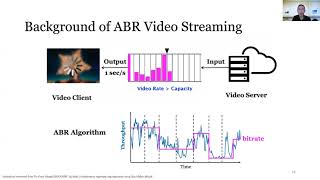
- 1:00Video systems and tunable params
- 2:47Randomized trial methodology
- 4:14Device and network treatment differences
- 5:40Device-level tuning necessity
- 7:04Per-cohort tuning challenges
- 8:26Low-rank structure in cohort data
- 9:30Ashim system introduction
- 11:17Regime’s exploration phases
- 13:24Handling non-stationarity
- 14:05Evaluation results vs baselines
- 15:08Live deployment case study
- 16:11Conclusion and future
related talks
 14mUsing Performance Signals to Improve Video Recommendations
 15mProactive Energy-Aware Adaptive Video Streaming on Mobile Devices
 30mMLDS 2019: Anubhav Shrivastava of Voot at Machine Learning Developers Summit 2019
 20mWinning the Game: Leveraging Contextual Bandits for Creative Optimization
 18mOn-device Video Playback Upsampling
 45mImproving Video Playback with ExoPlayer
 24mImproving YouTube Recommender systems for big screen users
 16mImproving Streaming Experience with Bayesian Optimization, from AB to...