Cost-effective and Reliable Global Internet Peering with Programmable Switches

summary
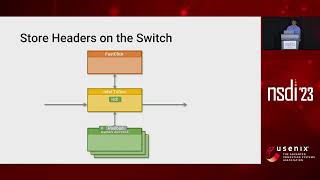
A production hybrid peering system called Janus uses programmable switches (Broadcom Trident3 in testbed) plus DPDK 48-core hosts to offload inbound traffic to switches, redirect suspicious flows to an anti‑DDoS cluster, and dispatch outbound “hot” prefixes to switches while keeping cold/full BGP in hosts. Fewer than 10% of routes carry >82% of traffic, enabling a measured 78% hardware cost reduction and sub-5s convergence under failures with three‑layer DDoS mitigation in Tencent’s deployment.
AI-written summary · about
chapters (15)
- 0:00Introduction
- 1:02Traditional cloud peering
- 2:28Peering pain points
- 3:32Janus design principles
- 4:12Janus hybrid architecture
- 5:16Traffic distribution key
- 6:19Outbound traffic offloading
- 7:01BGP routing sync
- 7:44Fast convergence techniques
- 8:48DDoS mitigation layers
- 10:33Testbed setup
- 11:14Performance results
- 12:43Application routing evaluation
- 13:06Lessons from deployment
- 13:48Conclusion
related talks
 18mTGW: Operating an Efficient and Resilient Cloud Gateway at Scale
 12mAccessing Cloud with Disaggregated Software-Defined Router
 34mHyperRouter: Lessons Learnt from Building an L4 Load...
 37mDisaggregating the Network: Switching as a Service
 16mA High-Speed Stateful Packet Processing Approach for Tbps Programmable Switches
 19mDisaggregating Stateful Network Functions
 29mUsing the Internet as Your Load-Balancer
 23mBalancing on the Edge: Transport Affinity without Network State