Saying no is OK

summary
Addresses why saying no prevents burnout and gives concrete tactics: use time blocking and Pomodoro sprints, put every task in the calendar, apply the two‑minute rule, batch similar tasks, and use noise‑cancelling headphones to reduce open‑office distractions. Respond fast by acknowledge and appreciate, offer an alternative timeline or delegate, escalate unresolved priority conflicts to management/HR, and keep refusals private when possible. Claims these steps reduce missed deadlines and restore work‑life balance; they report improved productivity and fewer late‑hour emails when enforced.
AI-written summary · about
chapters (13)
- 0:00Introduction
- 1:10Defining saying no and its contexts
- 3:37Fears around saying no
- 7:38Myths about saying no
- 9:28Consequences of always saying yes
- 13:01Priorities and goals
- 16:45Staying professional when declining
- 20:00Handling work requests
- 27:57Professional responses
- 30:05Jane’s real-life scenario
- 32:07Time management tips
- 40:53Reflecting and adjusting
- 42:17Closing and Q&A
related talks
 30mStrategies for saying no
 38mThe Power of Saying ‘No’
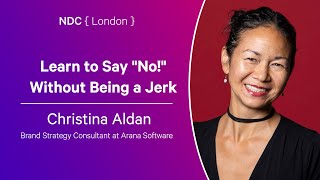 57mLearn to Say "No!" Without Being a Jerk
 46mLearn to Say No! Without Being a Jerk
 45mDeveloper career tools: Saying NO to improve mental health Q&A
 25mThe Power of 'No'
 21mTales from the Field - How to Avoid Burnout
 55mZen-Driven Development - Protect Your Sanity