Analytics Architectures on Microsoft Fabric

summary
Compares concrete architectures on Microsoft Fabric and shows measurable wins: a 10TB TPC‑H run matches Synapse DW3000 on an f64 at roughly 1/8 the cost, ingestion clocks ~6 TB/hour on f64 and up to ~34 TB/hour on larger skews, query bursting and resource isolation provision nodes per query, Spark offers 128 cores per f64 with 3x burst concurrency, one Lake plus shortcuts and mirroring avoid copying, V‑order parquet gives up to 50% read improvement, and fixing bad schema types cuts a query from 8:10 to 5:15.
AI-written summary · about
chapters (8)
- 0:00Introduction
- 2:56Analytical workloads challenges
- 8:14Data warehouse limits
- 15:38Data Lake drawbacks
- 23:50Cloud migration benefits
- 31:51Lakehouse promise
- 40:45Data mesh implementation
- 47:47Q&A
related talks
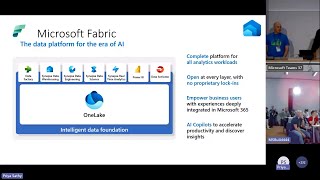 46mMicrosoft Fabric Synapse data warehouse Q&A
 30mDataEngBytes 2023 - BRI-T1-04 - Mimoune Djouallah
 23mArchitecting for Performance, Scalability and Real-time Data with AWS
 06mAchieve predictable performance
 40mBest Practices and Optimization with the Spark Engine
 48mAccelerate insights with real-time Azure SQL data and Microsoft Fabric
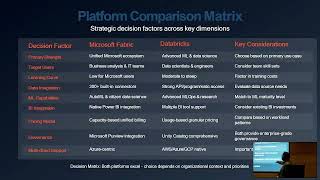 26mIntegrating Microsoft Fabric and Databricks for Modern Data Analytics
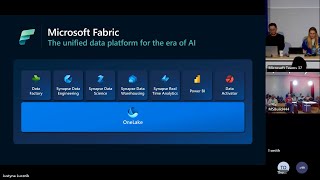 50mMicrosoft Fabric Data Factory Q&A