Govern your data in Fabric

summary
Shows how Fabric’s governance features actually work: sensitivity labels classify artifacts (lakehouses, pipelines, datasets) but inheritance stops after a manual change and the dataset-to-report propagation is partial; endorsements vs certification distinguishes crowd promotion from a limited certified stamp; lineage/impact analysis shows one-workspace upstream/downstream only and can email owners; scanner API returns full JSON metadata for automation while Purview Hub supplies built-in inventory reports — PowerShell automates scans and domain assignment.
AI-written summary · about
chapters (8)
- 0:00Data governance intro
- 1:52Tooling in governance
- 3:56Sensitivity labels
- 12:09Endorsements and certification
- 17:22Lineage and impact analysis
- 25:52Domains for grouping
- 36:09Scanner API for metadata
- 44:01Summary
related talks
 23mData Governance For Data Mesh
 16mTurning Data into Action: The Path to Successful Data Governance
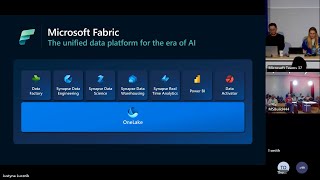 50mMicrosoft Fabric Data Factory Q&A
 19mAccelerate your data potential with Fabric
 49mExtend and enhance your analytics applications with Microsoft Fabric
 40mBuilding trust in your data. Why data governance is the key to success.
 27mRecipe for Building a Discoverable and Governed Data Platform.
 12mThe mechanics of Real-Time Intelligence in Microsoft Fabric