Toward a Transparent Society

summary
Argues that personal privacy is already mostly lost while government secrecy remains intact, enabling institutions to hoard whole communications feeds (PRISM style) into big hard disks in Bluff Utah and build a system that could become TurnKey totalitarianism. Traces action history: co-founded the Electronic Frontier Foundation (1990), helped fund leak-support efforts last December and raised more than half a million dollars, and warns that transparency of institutions must match loss of individual privacy or risk unchecked authority.
AI-written summary · about
chapters (14)
- 0:00Introduction
- 1:15Founding the Electronic Frontier Foundation
- 3:00Right to know versus privacy tensions
- 4:28Loss of privacy
- 6:18Government secrecy flaws
- 8:03Early intelligence interactions
- 10:51Intelligence agency incompetence
- 12:19NSA and CIA secrecy
- 13:24Mass surveillance limits
- 14:26Constitutional concerns
- 16:11Funding leaks
- 17:14Symmetry in transparency
- 19:01Public awareness
- 19:23Q&A
related talks
 59mProtecting Civil Liberties With Privacy-Enhancing Technology
 46mRFC 1984: Or why you should start worrying about encryption backdoors and mass data collection
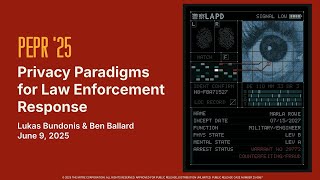 20mPrivacy Paradigms for Law Enforcement Response
 47mKeynote: From 2020 to 2121: How will we get there?
 01h 08mDo-it yourself privacy protection. Empowerment or burden?
 26mAn inflection point for privacy rights
 10mKeynote Speech
 22mTechnological totalitarianism, politics and democracy