Open Source Licensing: Types, Strategies and Compliance
summary
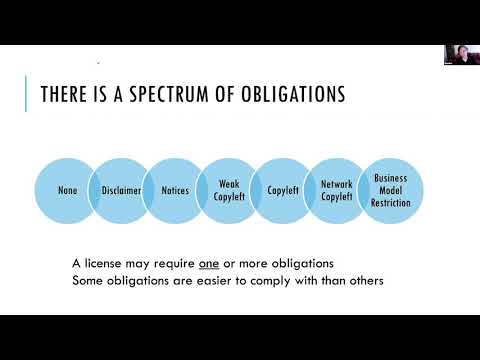
Explains which licenses impose concrete obligations (BSD/MIT notices, AGPL for SaaS, Commons Clause/SSPL restrictions), shows real incidents to care about (Heartbleed and Struts) and names practical tools and standards (CVE listings, SCA scanners, palamida heritage, OpenChain conformance). Claims typical apps grow from a few dozen to thousands of components, cites dual-licensed examples (MySQL, MongoDB, iText, wolfSSL), and demonstrates remediation paths: replace, rewind, or resolve with vendor SLAs.
AI-written summary · about
chapters (25)
- 0:00Intro
- 1:05About Jeff
- 1:53Agenda
- 2:57Why open source licenses
- 5:18Types of obligations
- 8:10Commercial obligations
- 12:02History of open source licenses
- 14:33Attribution notices
- 15:47Copyleft licenses
- 17:31Corresponding source
- 18:57Nonopen source
- 22:11BSD
- 26:43Patents
- 30:32Dual Licensing
- 33:58Examples
- 35:07License Versions
- 37:09Distribution
- 38:23Gray Areas
- 39:53What Looks Like Open Source
- 42:31Questions
- 49:48Welcome
- 50:32Public Domain
- 53:25Creative Commons
- 56:15How have things changed
- 57:22Repository managers
related talks
 30mOpen Source Licensing: Use Versus Abuse
 14mOpen Source Licensing in a Business World
 48mWhat You Need to Know About Open Source - Trust Me, I'm a Lawyer
 42mOpen Source Licenses: Between Parish Wars and Radicalism
 57mWhat You Need to Know About Open Source—Trust Me, I'm a Lawyer
 25mOpen Source Compliance
 51mThe Impact of Leveraging Open Source
 01h 04mWhat You Need to Know About Open Source—Trust Me, I’m a Lawyer