Open Source for Open Science with Frictionless Data

summary
An open source project shows concrete results: a small team builds a suite of tools — a browser data package creator, a command-line and Python frictionless validate, and a Python pipeline framework that emits a pipeline spec YAML and a clean datapackage.json. Work with BCODMO converts messy ocean CSVs into validated, versioned packages (duplicates and type errors detected), and profile work targets manuscript tables and statist‑ontology mapping for reproducible, machine‑readable results.
AI-written summary · about
chapters (21)
- 0:00Intro
- 4:58Open Science vs Coronavirus
- 8:16How can Open Source help make science more open?
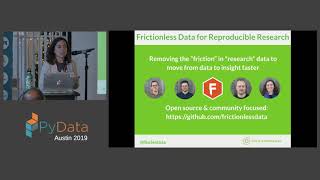
- 9:42Frictionless Data for Reproducible Research
- 10:29What is "Friction" in Data?
- 11:50What is Frictionless Data?
- 12:322 Scientific Data Use Cases
- 13:24Frictionless data management with BCO-DMO
- 15:02BCO-DMO data is MESSY
- 15:52Creating a Frictionless data processing pipeline
- 16:58What is this data? (document the metadata!)
- 21:43Is this data valid?
- 23:48Validate your data with Frictionless Validate
- 24:56BCO-DMO: Validate data as it is submitted
- 25:40Does this data need to be transformed?
- 28:22How are y'all doing?
- 29:59Scientific manuscripts == career currency
- 31:11What are some issues with this data table that would limit machine reading/automatic data parsing?
- 36:03eLife Key Resource Table as a Frictionless profile
- 38:11Frictionless Datascriptor: next steps
- 39:18How can YOU participate?
related talks
 38mFrictionless Data Pipelines
 37mOpen-Source Science: Working with OSPOs to Accelerate Research in...
 34mOpenDataology - An Open Source Dataset License Compliance Project Initi...
 34mData pipelines powered by Open source and fun
 58mBuilding an Open Platform for Sustaining Data Science Innovation
 37mMap of Science: A UI for Open-Source Science
 31mOpen Source SCA
 44mPanel Discussion: How Open Source Helps DataOps