WebKit 2 - Looking Forward
summary
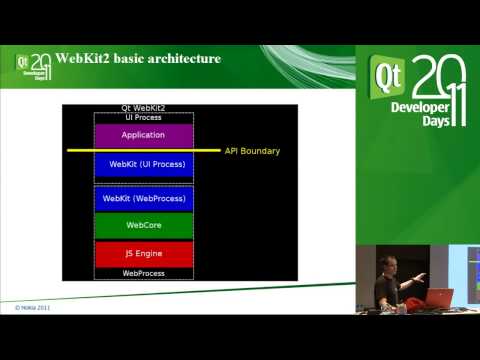
Overview of WebKit2 integration with Qt: WebKit2 introduces a split-process model that moves rendering and JavaScript into a separate web process to keep the UI thread responsive, increase stability (web crashes no longer kill the UI), and enable sandboxing for better security. Qt ports require Qt 5, QML focus and OpenGL mandatory for accelerated compositing. Challenges remain for synchronous APIs like evaluateJavaScript and QWebElement, so Qt implements asynchronous IPC and is building QML-based bindings; a demo browser shows a separate web process that can be killed and reloaded successfully.
AI-written summary · about
chapters (13)
- 0:00Introduction and speaker intro
- 2:32What is WebKit 1
- 9:14Why WebKit 2 exists
- 10:59WebKit 2 architecture overview
- 16:56Comparison with Chromium
- 18:23Key subsystems in WebKit 2
- 21:53Requirements and API design
- 24:22Desktop vs touch API split
- 27:15QML integration and example
- 30:03Challenges and future plans
- 33:55Live demo of WebKit 2
- 37:09Feedback and community involvement
- 38:17Q&A session


