BlinKey: A Two-Factor User Authentication Method for Virtual Reality Devices

summary
A two-factor VR unlock that combines blink rhythm + pupil-size adaptation as a single “blinkey,” captured by an eye tracker and classified with k‑NN. Implemented on an HTC Vive Pro with a Tobii eye tracker, it reports average EER 4.0% with 6 training samples, average login time 9.6 seconds, and >93% success on first attempt. False-accept rates fall to zero when blinkey length reaches 7–8, and the scheme resists shoulder‑surfing, statistical forging, and credential‑aware attacks.
AI-written summary · about
chapters (6)
- 0:00Introduction to VR security
- 1:06Existing security challenges
- 1:36The BlinkKey concept
- 2:44System implementation
- 3:46Security evaluation
- 4:38Usability and demonstration
related talks
 33mFor Smarter Authentication, We Might Need to Use ...
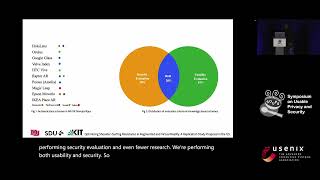 06mOptimizing Shoulder-Surfing Resistance in Augmented and Virtual Reality
 26mVirtual U: Defeating Face Liveness Detection by Building Virtual Models...
 14mRed Bleed: A Pragmatic Near-Infrared Presentation Attack on Facial Biometric...
 19mThumprint: Socially-Inclusive Local Group Authentication Through Shared Secret Knocks
 45mYour passport to the 7th continent
 05mAuthentication UX Design Opportunities for Future Smart Glasses
 06mListen to Your Fingers: User Authentication based on Geometry Biometrics of Touch Gesture