Optimizing Shoulder-Surfing Resistance in Augmented and Virtual Reality
summary
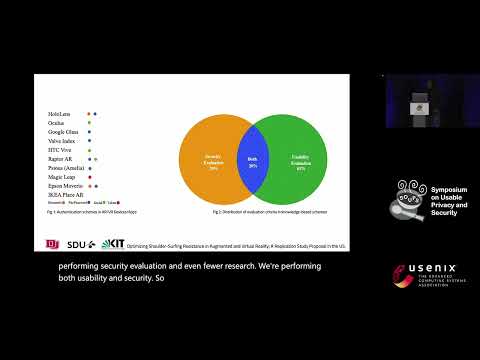
A US replication studies a graphical recognition password called the T scheme that enrolls users with five random images and authenticates via five 16-image grids (select one target per screen) implemented on oess and valve index headsets. Measures include authentication accuracy, average time, NASA-TLX workload, SUS satisfaction, and attack success rate under shoulder-surfing; claim is lower data collection than biometrics and high resistance to observation attacks because recognition-based visual cues and immersive display reduce spoofing.
AI-written summary · about
related talks
 26mVirtual U: Defeating Face Liveness Detection by Building Virtual Models...
 07mMoving Usable Security and Privacy Research Out of the Lab...
 06mBlinKey: A Two-Factor User Authentication Method for Virtual Reality Devices
 45mYour passport to the 7th continent
 05mAuthentication UX Design Opportunities for Future Smart Glasses
 33mFor Smarter Authentication, We Might Need to Use ...
 12mSwitchAR: Perceptual Manipulations in Augmented Reality
 17mMise-Unseen: Using Eye Tracking to Hide Virtual Reality Scene Changes in Plain Sight