Polyglot Done Right with GraalVM

summary
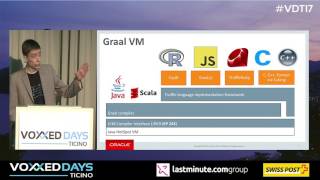
GraalVM runs JVM languages plus JavaScript (Node), Python, Ruby, R, WebAssembly and LLVM bitcode and claims near-native speed by using the Truffle interpreter layer and Truffle partial evaluation to inline interpreter nodes into hot machine code. Examples: server-side React rendering from a Java backend, Doom running via the LLVM guest, JR‑CUDA bindings for GPU code, Dutch police embedding R in Scala, and Coherence sharing a cache between Java and Node. Key APIs are polyglot Engine/Context/Value/Proxy API, plus Chrome‑inspector cross-language debugging and optional AOT native images.
AI-written summary · about
chapters (10)
- 0:00Introduction and motivation
- 4:19What GraalVM offers
- 9:37Truffle framework and interpreters
- 14:20Partial evaluation and optimizations
- 20:21Polyglot API overview
- 24:42Demo of polyglot execution
- 34:19API details and advantages
- 39:51GraalVM ecosystem and performance
- 43:21Resources and community
- 44:25Q&A
related talks
 52mPolyglot on the JVM with Graal: One VM for Java, node.js, Ruby, R, and C++!
 50mOne VM to Rule Them All
 01h 19mTowards the tower of Babel: a Polyglot Language VM in Java
 52mGraalVM, the polyglot virtual machine
 20mGraalVM: Run Programs Faster Anywhere
 59mGraalVM: Run Programs Faster Anywhere
 47mJava and the GraalVM
 54mDeveloper's Introduction to GraalVM