Anomaly Detection in Smart Buildings using Federated Learning

summary
Federated learning trains anomaly detectors on-device and aggregates updates to catch sensor and network anomalies in smart buildings. Implementation uses PySyft (PyTorch) with a simple logistic regression running on two simulated gateways, training on the KD cub 1999 dataset via a Jupyter notebook; five epochs raise accuracy from ~70% to ~97%. Model moves to gateways for low-latency inference, updates return to cloud and combine by federated averaging. Defenses include differential privacy and cosine-similarity filtering against model poisoning.
AI-written summary · about
chapters (21)
- 0:00Introduction and overview
- 2:05What is a smart building
- 6:20Challenges in anomaly detection
- 8:11Why federated learning
- 9:14How federated learning works
- 12:00Smart building use case
- 14:11Evolution of anomaly detection
- 15:35Federated learning demo setup
- 17:24Demo data preparation
- 18:27Training federated models
- 20:36Demo validation and results
- 21:41Deploying the model
- 22:24Types of federated learning
- 24:32Single-party federated learning
- 25:34Multi-party federated learning
- 27:00Challenges in federated learning
- 29:31Differential privacy solution
- 31:41Model poisoning and detection
- 32:43Benefits of federated learning
- 33:27Resources and acknowledgments
- 33:50Aggregating model gradients
related talks
 26mAnomaly Detection System for the CERN Cloud
 28mA Privacy Enhancing Federated Learning Framework for Multi-Party Distributed ..
 29mAnomaly Detection
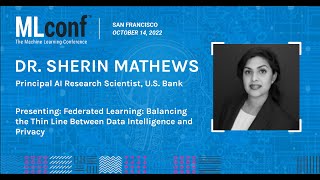 29mBalancing Thin Line Between Data Intelligence & Privacy
 13mAnomaly Detection on Remote Sensing with Ray + Horovod
 41mFederated Learning: Machine Learning on Decentralized Data
 42mLearning Together, Distributed: An Introduction to Federated Learning
 21mWhat, Why and How of Federated Machine Learning – Implementation Using...