Practical Approaches To Scaling Distributed Transactions

summary
Covers concrete tradeoffs: use two-phase commit (blocking, row locks, coordinator failure risk) for cross-database ACID, or use saga pattern across services (requires idempotent endpoints and compensation actions; e.g. REST posts + deletes simulating booking/compensation for SpiceJet and Indigo). Explains scaling techniques that work in practice—master/replica reads, database-level or application-level data partitioning, and functional partitioning (extract hot modules to services)—and when each approach breaks under load.
AI-written summary · about
chapters (8)
- 0:00Introduction to scaling
- 3:08Local transactions overview
- 5:15Two-phase commit protocol
- 9:12Saga pattern for services
- 14:12Challenges in distributed systems
- 19:12Scaling monolithic systems
- 23:58Data partitioning strategies
- 27:08Conclusion and Q&A
related talks
 55mTackling transactions in Microservices applications
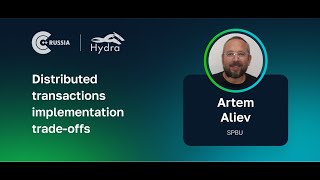 01h 00mDistributed transactions implementation trade-offs
 54mTackling transactions in a Microservices application
 46mLost in transaction? Strategies to deal with (in-)consistency in distributed systems
 36mLost In Transaction
 01mDon't Drop ACID - Transactions in Distributed NoSQL
 58mElements of Distributed Architectures
 28mTobias Petry :: Scaling Databases