Machine Learning Platforms

summary
Overview of practical platforms and tradeoffs: recommends starting with Anaconda + Jupyter notebooks for reproducible exploration and scikit‑learn for consistent APIs; explains production paths via PyTorch or TensorFlow and model portability with ONNX and TFX; shows device deployment options from Jetson Nano to browsers using TensorFlow.js with WebGL backend and gives a MobileNet performance example: same model runs ~3500ms on CPU, ~49ms on mediocre GPU, ~5ms on a strong GPU, demonstrating why hardware-aware deployment matters.
AI-written summary · about
chapters (14)
- 0:00Introduction and welcome
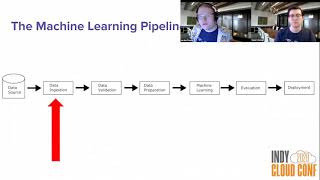
- 1:03Machine learning platform basics
- 10:11Hardware and deployment strategies
- 13:42Anaconda and Jupyter Notebooks
- 17:39Scikit-learn overview
- 21:53Using pre-built ML models
- 28:44PyTorch framework
- 30:27Java-based ML tools
- 33:35Spark and Hadoop environments
- 35:22TensorFlow and TFX
- 40:17Keras and model design
- 41:39TensorFlow.js and web ML
- 49:00Resources and next steps
- 51:26Q&A and closing
related talks
 48mDeploying Machine Learning Models in Practice
 18mDeploying ML solutions with low latency in Python
 33mOpen Standards for Machine Learning Deployment
 39mMachine Learning on Your Device: The Options
 40mCloud-based Machine Learning Offerings - Beginner's Perspective
 42mDeep learning beyond the learning
 42mDeep learning in Python: how to choose a framework?
 27mMachine Learning and Mobile