What Next After Microservices?

summary
Claim: the next phase keeps business code small and language-agnostic while moving distributed primitives out of process as sidecar + operator model. Uses Kubernetes for lifecycle, Istio/Envoy for mesh retries/timeouts and traffic-splitting, Knative for scale to zero serving and eventing, Dapr for a unified Dapr API (invocation, pub/sub, state). Resulting unit is a container of business logic plus one or more sidecars managed by operators; demos and projects show this composition works today.
AI-written summary · about
chapters (12)
- 0:00Introduction and background
- 1:01Distributed application needs
- 6:03Monolithic vs cloud-native platforms
- 8:09Kubernetes and microservices evolution
- 16:02Extending Kubernetes with sidecars
- 19:57Service mesh and API gateways
- 22:50K-native and event-driven systems
- 26:42Dapper and sidecar APIs
- 31:42Current distributed systems architecture
- 34:52Future trends in distributed systems
- 42:25Future microservices on Kubernetes
- 44:13What comes after microservices
related talks
 30mContainers and Next Gen Infrastructure Ecosystem
 49mMicroservices: An unexpected Journey
 50mMaking Microservices Micro with Istio & Kubernetes
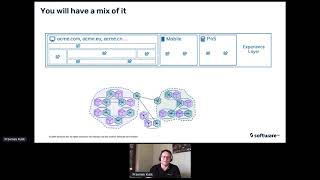 23mMicroservices Architectures: Agility vs Complexity
 37mKnee Deep in Microservices
 08mThe Evolution of Microservices Architecture in Cloud-Native
 57mDeveloping microservice applications with Dapr
 01h 03mDeveloping microservices like a boss with Dapr and Azure Container Apps