Java and the GraalVM

summary
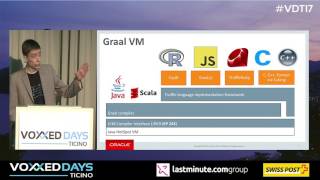
GraalVM is presented as a universal runtime that runs JavaScript, Python, Ruby, R, JVM languages (Java, Scala, Kotlin, Clojure) and LLVM languages (C/C++), and can operate standalone or embedded in OpenJDK, Node.js, Oracle Database or MySQL. The talk covers GraalVM 20.2.1’s performance improvements and polyglot interoperability, its Ahead-of-Time native-image capability that reduces startup time and memory for JVM apps, and the available Community (CE) and Enterprise (EE) editions and how GraalVM fits into the Java ecosystem.
AI-written summary · about
chapters (9)
- 0:00GraalVM introduction
- 1:47GraalVM Community Edition
- 8:17Graal compiler architecture
- 14:03Polyglot features
- 20:29GraalVM for microservices
- 28:06Native Image basics
- 35:11Native Image configuration
- 40:33Profile guided optimization
- 42:00GraalVM roadmap
related talks
 47mGraalVM for Endless Performance
 37mWhat Is This GraalVM Thing?
 52mGraalVM, the polyglot virtual machine
 17mGraalVM Runtime Efficiency and Contributing to the Development Community
 50mGraalVM 21.2 Feature Update of the Universal VM
 20mGraalVM: Run Programs Faster Anywhere
 54mDeveloper's Introduction to GraalVM
 50mOne VM to Rule Them All