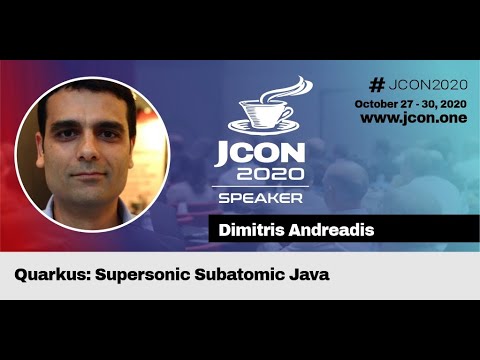
Quarkus: Supersonic Subatomic Java
summary
Quarkus claims to cut Java microservice RSS roughly in half versus a typical Spring Boot app and to drop further to about a fifth when compiled to native, using GraalVM/SubstrateVM (Mandrel) and its build-time bootstrapping via recorder technology to remove runtime classpath scanning. Live demo shows 0.8s startup for JVM mode, 16 ms native start, hot reload in ~0.25s, and an ecosystem of 330 extensions that mostly work end-to-end.
AI-written summary · about
chapters (14)
- 0:00Start
- 3:37Deployment density matters
- 4:42Cloud native Java: a Red Hat journey
- 6:05What is wrong with Java Frameworks
- 6:43How does a framework start?
- 10:42Quarkus Build Process
- 12:58Dead code elimination
- 13:43The Dark Side
- 14:37How faster/smaller? Rule of Thumb
- 15:44When to use which VM with Quarkus
- 27:14Quarkus Benefits
- 28:03Developer Joy
- 28:39Unifies Imperative and Reactive
- 29:19Best of Breed Frameworks & Standa
related talks
 52mQuarkus Supersonic Subatomic Java
 48mSupersonic, Subatomic Java with Quarkus
 46mQuarkus why, how and what
 59mQuarkus for Spring Developers
 01h 00mQuarkus from inside
 51mQuarkus why, how and what
 42mKeynote: Subatomic Java Microservices with Quarkus
 45mFaster, greener, and happier- why Quarkus should be your next tech stack