Quarkus why, how and what

summary
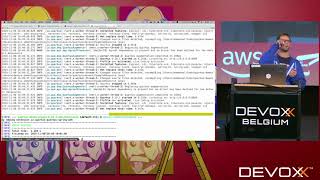
Quarkus bills itself supersonic subatomic and the demo shows why: a to‑do app is generated from code.quarkus.io using JAX‑RS (and a Spring compatibility layer), Hibernate with Panache, Postgres and Maven, with live dev reload recompiling changes in 0.35s dev reload and a working search endpoint with pagination and OpenAPI/Swagger UI. Tests start the whole app, native builds use GraalVM to produce a binary with 43 ms native startup and about 24 MB memory, but native compilation takes noticeably longer.
AI-written summary · about
chapters (12)
- 0:00Start
- 19:20The hidden truth about Java + containers
- 23:45Supersonic Subatomic Java
- 25:23Benefit No. 3: Unifies Imperative and Reactive
- 26:08Best of Breed Frameworks & Standards
- 27:07Move startup time to build time
- 28:55Build time benefits
- 29:47An ahead-of-time, build-time, runtime
- 30:44AOTC - GraalVM - Dead code elimination Closed-world assumption
- 33:02When to use which VM with Quarkus
- 35:58Testing is running
- 36:40Observability
related talks
 51mQuarkus why, how and what
 52mQuarkus Supersonic Subatomic Java
 49mQuarkus, the Java Stack back from the Future
 54mQuarkus: Java development turned into delight
 48mSupersonic, Subatomic Java with Quarkus
 44mQuarkus: Supersonic Subatomic Java
 44mQuarkus: Supersonic, Subatomic Full-Stack Development
 49mQuarkus Intro