SOFT: Selective Data Obfuscation for Protecting LLM Fine-tuning against...

summary
SOFT identifies low-loss “influential” training samples after a one-epoch warm-up, flags those below a validation-loss threshold, replaces them with semantically equivalent paraphrases (selective obfuscation, paraphrasing with GPT-4), and fine-tunes on the mixed dataset. Across six domains and multiple LLM sizes the ensemble membership-inference attack AUC/AOC falls from ~0.76 for full fine-tuning to ~0.52 with SOFT, while task accuracy stays near baseline, showing substantial privacy reduction with minimal utility loss.
AI-written summary · about
related talks
 21mFrom Data to Precision: Fine-Tuning LLMs for Proprietary Query Languages
 25mFinetuning Large Language Models (LLMs) for Security Log Detections
 01h 27mChallenges in Making LLMs Safe and Robust
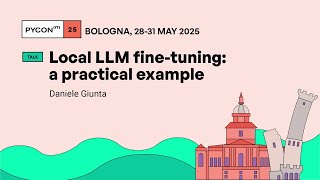 29mLocal LLM fine-tuning: a practical example
 36mLanguage Model Post-Training in 2025: an Overview of Customization Options Today
 25mUsing Large Language Models to Improve Data Loss Prevention in Organizations
 31mCustomizing LLMs: A Guide to local Fine-Tuning...
 28m🧼 From GPU-poor to data-rich: data quality practices for LLM fine-tuning