When kdump is way too much

summary
Kdump needs ~200 MB prereserved RAM and can fail during panic boot, so pstore is used on Steam Deck as a lightweight alternative that avoids rebooting a panic kernel. A small pstore RAM backend (~1–2 MB) stores printk, task states and full CPU backtraces; tooling named kst tool defaults to pstore on Arch, using a 4 MB printk buffer and works in field tests. Limits: not a full vmcore, notifier ordering risks, and a need for easier memory reservation and optional BPF-pluggable panic prints for targeted data.
AI-written summary · about
chapters (10)
- 0:00Introduction and background
- 1:06Console hardware and context
- 3:14Purpose of log collection
- 5:03Kdump limitations and issues
- 8:18Pstore as lightweight alternative
- 10:46Pstore advantages and trade-offs
- 12:58Enhancing data with printk
- 13:40Panic notifiers and risks
- 15:07Challenges and improvements for pstore
- 17:17Q&A session
related talks
 20mProactive and crash-time data collection on Steam Deck
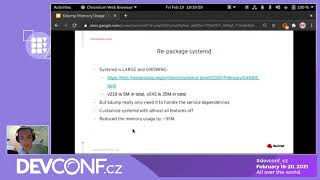 19mKdump memory usage
 21mProactive and crash-time data collection on Steam Deck
 13mRamdump for Trusted VMs: Efficient Crash Debugging Without Reboot Device
 37mPracticing Linux Crash/Panic Issue on Production and Cloud Server: Using K...
 52mLinux Kernel Debugging: Going Beyond Printk Messages
 22mPreserving guest memory across kexec
 34mPostmortem Debugging with Coresight