UX in the 3rd Dimension

summary
Madame Tussaud Ghostbusters VR reveals what breaks immersion: avatar clipping, lag and a wobbling plank that provokes real fear; mitigation techniques include teleportation and offering a virtual body; platform differences matter — HTC Vive 15x15 ft room scale, inside‑out tracking on mixed headsets, and HoloLens spatial audio (HRTF) change design choices; latency over 20 milliseconds correlates with cybersickness; concrete advice: build on the target hardware, test early and often, and prefer contextual anchors over floating HUDs.
AI-written summary · about
chapters (11)
- 0:00Welcome to 3D UX
- 3:10Why UX matters in virtual and augmented realities
- 5:20AR/VR tech history
- 9:23Differences between augmented reality and virtual reality
- 12:45Immersive experience design
- 15:57VR movement basics
- 18:323D environment interactions
- 25:33Capturing attention in VR
- 32:15Cyber sickness causes & fixes
- 39:48Testing AR/VR solutions
- 43:26Future of adaptive VR
related talks
 51mThere's a Hologram in my UI!
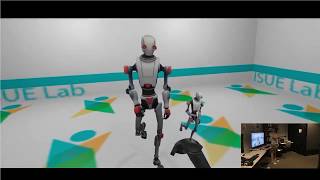 30mLeveraging Decades of Research in 3D UI Makes or Breaks XR
 48mTalking VR Turkey
 31mLessons from Oculus: Overcoming VR Roadblocks
 46mScience based Design Decision Making for Virtual Reality
 34mFuture VR Input & UX Solutions
 06m3PP-R: Enabling Natural Movement in 3rd Person Virtual Reality
 42mDesigning Engaging VR & AR Games