Challenges of an open source operating system
summary
Open source Android faces concrete constraints: every API change goes through multi-stage reviews and must pass CTS and CTS Verifier checks, or OEM optimizations silently break core behavior (one bug traced to removed code that had no CTS coverage). Security patches speed improves after Project Treble decouples vendor layers. Fragmentation shows up numerically—about 14.5% still on KitKat—and a major feature like resource overlays takes years of iterative releases to land and actually work.
AI-written summary · about
chapters (19)
- 0:00Introduction
- 1:24About me
- 2:57Development
- 4:12Open Source
- 6:50Mobile
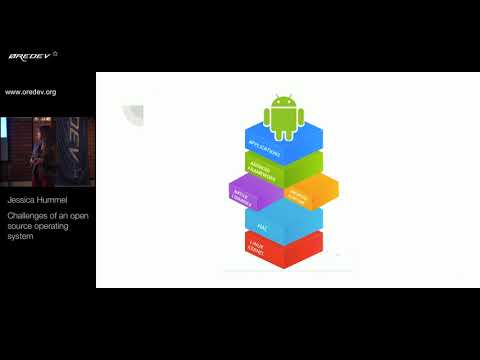
- 8:16Android layers
- 8:52Android framework
- 9:24Android licenses
- 12:12Screen size fragmentation
- 12:39Ice level fragmentation
- 13:16Android devices
- 15:27Documentation
- 16:02Testing
- 21:24Context
- 21:41First example
- 24:30Second example
- 30:33Fifth example
- 32:01Summary
- 36:24Recap
related talks
 20mAndroid is open source, what does that mean for us?
 01h 08mAndroid Plateform Anatomy
 15mCan mainline Linux run on Android without vendor hooks
 08mTechnical debt
 46mWhy Projects Succeed: Lessons Learned from the Android OS
 37mOpen source and Android Automotive OS
 48mChallenges in Android Supply Chain Analysis
 45mHow Open Source Powers Facebook on Android