Microservice Websites
summary
Shows that Edge Side Includes powers server-side transclusion used on IKEA M2 Norway to mash up five independently deployed services, keeping end-to-end pages under heavy composition and still achieving a page load under 1 second in measurements. Explains how fragment resources deliver cache-busted CSS/JS without breaking deploys, uses a 15‑minute ESI cache, and enables teams to push 1–2 releases per week each, with concrete architecture and tradeoffs rather than vague platitudes.
AI-written summary · about
chapters (24)
- 0:00Intro
- 0:55IKEA M2 Norway (5 services)
- 1:35Desktop support
- 4:39End-user performance - conversion
- 5:49Performance strategy
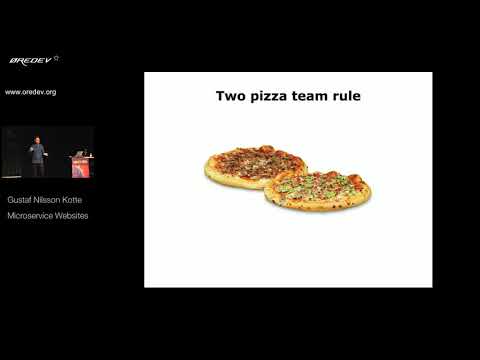
- 7:52Two pizza team rule
- 8:33Conway's Law (simplified)
- 9:14IKEA M2 services/teams
- 9:39Frontend monolith?
- 10:17Frontend teams/ services
- 12:00Building block: Transclusion
- 13:48Edge-Side Includes!
- 16:54AJAX example
- 19:04Share content between services!
- 20:38Fragment type dependencies
- 21:38without leaky cache busts
- 22:35Autonomous delivery
- 24:36Other approaches for components?
- 25:26Performance problem!
- 27:57"Scalable over time" problem!
- 29:02What common dependencies can fragment producers assume?
- 30:10Technology diversity
- 35:02Summary
- 35:54Resources
related talks
 01h 06mA High-Performance Solution to Microservices UI Composition
 33mWeb Architecture for IKEA.com – Present/Future
 37mIntroduction to Micro Frontends
 11mTransforming Enterprise Frontends with Micro-Frontend Architectures
 33mPowering up Micro-frontends at the Edge!
 27mMicro Frontends: Break Up You Web App!
 47mThe Micro Frontend Architecture: How to Turn Your Website into a Giant Collaborative Puzzle
 24mScaling Frontend Development using Micro-frontends