Science based Design Decision Making for Virtual Reality
summary
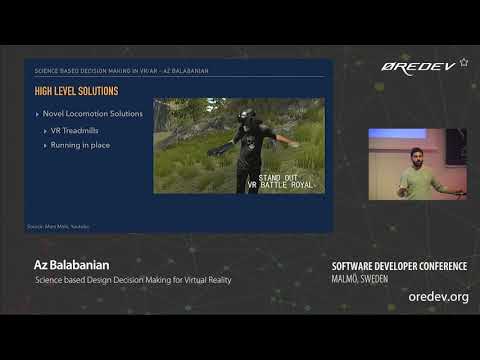
Compilation of 2.5 years of weekly interviews distills actionable claims: VR needs ~90 fps and uses asynchronous Time Warp/Space Warp to hide judder; locomotion hacks include redirected walking, walk-in-place, teleportation, cockpit framing, speed streaks and a rendered nose (reducing sickness ~10–20%); display fixes are anti–screen-door panels, Half Dome focal prototypes and foveated rendering (≈50% GPU savings); experimental hardware includes galvanic vestibular stimulation for perceived G‑forces and dual‑screen or light‑field focal solutions.
AI-written summary · about
chapters (18)
- 0:00Start
- 0:29WHAT I'LL BE TALKING ABOUT TODAY
- 3:04RESEARCH VR PODCAST
- 3:57WHY DOES SCIENCE MATTER
- 6:13MOTION SICKNESS/VR SICKNESS-THE PROBLEM
- 8:35LOW LEVEL SOLUTIONS
- 10:12HIGH LEVEL SOLUTIONS
- 14:58BETTER SOLUTIONS
- 19:30YOU DON'T HAVE REINVENT EVERYTHING
- 21:21FUTURE SOLUTIONS
- 22:44MOTION SICKNESS TAKEAWAYS
- 26:09THE SCREEN DOOR EFFECT-SOLUTION
- 26:48HIGHER RESOLUTION DISPLAYS - THE PROBLEM
- 27:26HIGHER RESOLUTION DISPLAYS - FOVEATED RENDERING
- 29:24FIXED FOCAL DISPLAYS-DEPTH PERCEPTION
- 32:22VERGENCE-ACCOMMODATION CONFLICT
- 33:35VERGENCE ACCOMMODATION-POSSIBLE SOLUTIONS
- 35:34VISUAL CLARITY-TAKEAWAY
related talks
 50mVR Best Practices
 53mGame design for VR: Breaking Rules
 42mDesigning Engaging VR & AR Games
 30mLeveraging Decades of Research in 3D UI Makes or Breaks XR
 43mFrom 0 to 90: achieving peak performance in multiplatform VR development
 43mThe Real, the Virtual, and the Cortex
 34mFuture VR Input & UX Solutions
 31mHow to make your user sick in 60 seconds