Neuroinclusive Content Design

summary
Practical checklist for neuroinclusive content: reduce complexity with short sentences, headings and one thought per paragraph (aim reading age 9–15), prefer sentence case over title case, and use clear actionable link text. Test reading load with Hemingway.com and audit pages for long PDFs—convert PDFs to HTML where possible. Don’t autoplay videos, provide captions/transcripts and alt text, write error messages that explain the problem and how to fix it, and remember roughly 15–20% of the US population is neurodivergent so test with diverse users.
AI-written summary · about
chapters (8)
- 0:00Introduction and agenda
- 1:22What is content design
- 7:53Understanding neurodiversity
- 11:38Reducing design complexity
- 24:04Effective error messaging
- 31:17Optimizing link text
- 37:43Digital assets and testing
- 42:41Q&A and conclusion
related talks
 26mWords that welcome: content design with neurodiversity in mind
 16mCognitive A11y: Designing Neuroaccessible docs for Neurodivergent minds
 51mBuilding A11y Digital Experiences for Neurodivergent Users
 01h 08mAccommodating Neurodivergent Learners
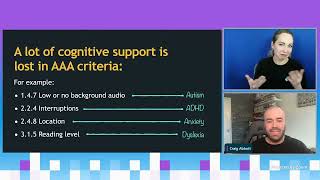 50mDesigning for neurodiversity
 49mUnderstanding the 'Why' Around Neurodivergent Inclusive Web Design
 44mInclusive Content Strategy
 55mInclusive Content Strategy