Level Up Your Concurrency Skills With Rust

summary
Claim: Rust’s ownership and compile‑time checks eliminate a whole class of concurrency bugs — data races impossible — by enforcing ownership and lifetimes and borrowing rules. Examples include mutable versus immutable references, moves versus clones, and ampersand borrows; the game engine case writes directly into a D3D vertex buffer to avoid a temporary but introduces a data race that blanks the screen at 60 frames per second (~16 ms), so the risky optimization is reverted and the release ships. Conclusion: Rust catches many concurrency errors at compile time.
AI-written summary · about
chapters (14)
- 0:00Introduction
- 1:40Why learn Rust
- 5:26Game Engine
- 10:28Data Race
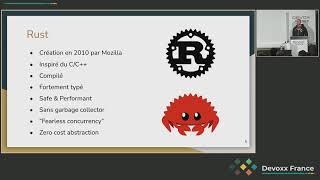
- 17:09What is Rust
- 18:44Examples
- 27:38Borrowing
- 30:28HeightIn
- 31:23Mule Borrowing
- 32:13Conclusion
- 32:53Memory Safety
- 33:08Ownership of Resources
- 36:53Compile Time
- 37:56Final Thought