You Don't Own Me

summary
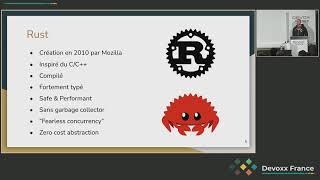
Rust promises memory and thread safety without a GC by enforcing an ownership model where each value has one owner, moves transfer ownership, and values are dropped when their owner leaves scope; the borrow checker (now improved with non‑lexical lifetimes) and the drop checker run on the compiler’s MIR to verify lifetimes and drop order at compile time. Use cases include command‑line tools, WebAssembly, embedded and networking code; known crates include tracing, Tower, rustdoc tooling and cryptography libraries such as the X25519 crate.
AI-written summary · about
chapters (10)
- 0:00Start
- 1:10Rust A language empowering everyone to build reliable and efficient software.
- 2:21RUST IS FUNCTIONAL
- 10:54WHAT SHOULD I USE RUST FOR?
- 11:53HOW DOES RUST PROVIDE THE SAME NICETIES FUNCTIONAL LANGUAGES DO WITHOUT GARBAGE COLLECTION?
- 12:19OWNERSHIP MODEL
- 16:38RUST'S TYPE SYSTEM
- 23:59WHAT HAS ACTUALLY BEEN BUILT WITH RUST?
- 25:24WHAT HASN'T BEEN BUILT WITH RUST?
- 26:00OTHER REASONS TO WRITE RUST?