Memory Safety with Rust
summary
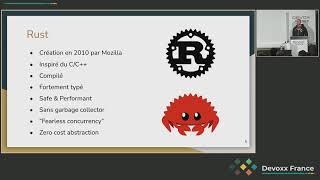
Rust provides memory safety without a garbage collector by using ownership and borrowing with explicit lifetimes so the compiler enforces deterministic destruction and prevents dangling references. The talk covers language features such as Box (heap allocation), move versus copy semantics, and borrowing rules implemented in compiler and standard library types, and cites Mozilla’s Servo as a practical multicore system project using this model.
AI-written summary · about
chapters (20)
- 0:00Intro
- 2:04Systems programming?
- 3:56Modern?
- 5:10Why Rust?
- 8:29Garbage collection?
- 9:29Memory control
- 10:21Copying objects
- 12:28Example (C++)
- 15:52Copy (or POD)
- 16:57Non-copyable data
- 19:03Move semantics
- 21:51Ownership
- 23:14Borrowing
- 27:04Mutable borrow
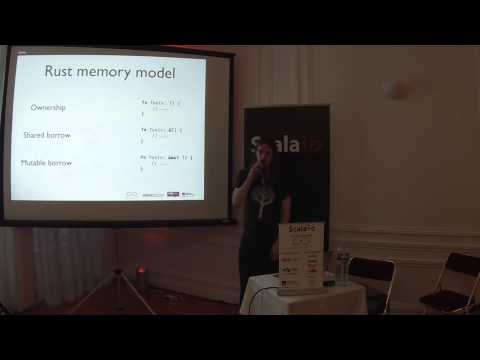
- 28:54Rust memory model
- 34:58Lifetime parameters
- 44:21Procedures
- 44:44Unboxed closures
- 45:43Closure traits
- 47:02Conclusion?