Let’s Talk About Rust
summary
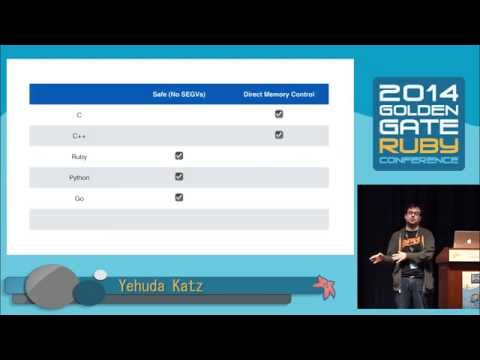
Rust claims C-like control and memory efficiency while proving safety and productivity: the compiler enforces ownership rules and gives a compile-time error if a value is moved or aliased across threads, preventing segfaults. Traits and generics enable zero-cost abstractions with static dispatch and inlining so polymorphism costs nothing, and iterators are lazy with no intermediate allocations. Example code shows implementing an is_blank trait for String Array Option and Bool, and threaded file examples demonstrate when the borrow checker accepts or rejects code.
AI-written summary · about
chapters (9)
- 0:00Introduction to Rust
- 1:03Programming language trade-offs
- 4:28Safety and memory control
- 6:35When performance actually matters
- 10:38Zero cost abstractions in Rust
- 17:19Traits and static dispatch
- 21:02Iterators and functional style
- 23:34Ownership and memory safety
- 32:25Empowering developers


