Why Rust?

summary
Rust claims memory safety without a Garbage Collector and zero-cost abstractions while letting you drop to bare metal; the compiler enforces ownership and the borrow checker prevents data races, nulls and many segfaults at compile time (example: a double-mutable-borrow into a growing Vec is rejected). Tooling includes Cargo (create/build/test/bench/install/publish), rustfmt, racer, clippy, a VS Code “rusty code” plugin, tracing profilers and coverage tools. Production uses: Servo engine and Dropbox storage components; Diesel ORM and native OpenGL wrappers show competitive or better speed than C.
AI-written summary · about
chapters (19)
- 0:00Introduction and welcome
- 1:07Why learn Rust
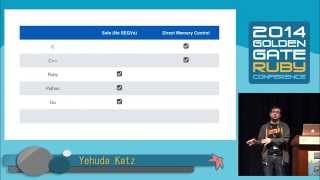
- 2:54Rust vs other languages
- 4:47Systems programming challenges
- 6:54Rust’s origins and growth
- 8:20Rust’s safety and abstractions
- 11:54Basic Rust code example
- 16:40Stack vs heap in Rust
- 18:29Rust’s strengths and weaknesses
- 20:16Type safety in Rust
- 23:22Memory management in Rust
- 24:23Borrow checker and safety
- 27:18Compile-time guarantees
- 29:52Rust IDEs and tools
- 31:16Cargo package manager
- 32:43Built-in testing and benchmarking
- 33:51Rust tooling overview
- 34:57Community and learning resources
- 35:43Quick Q&A session